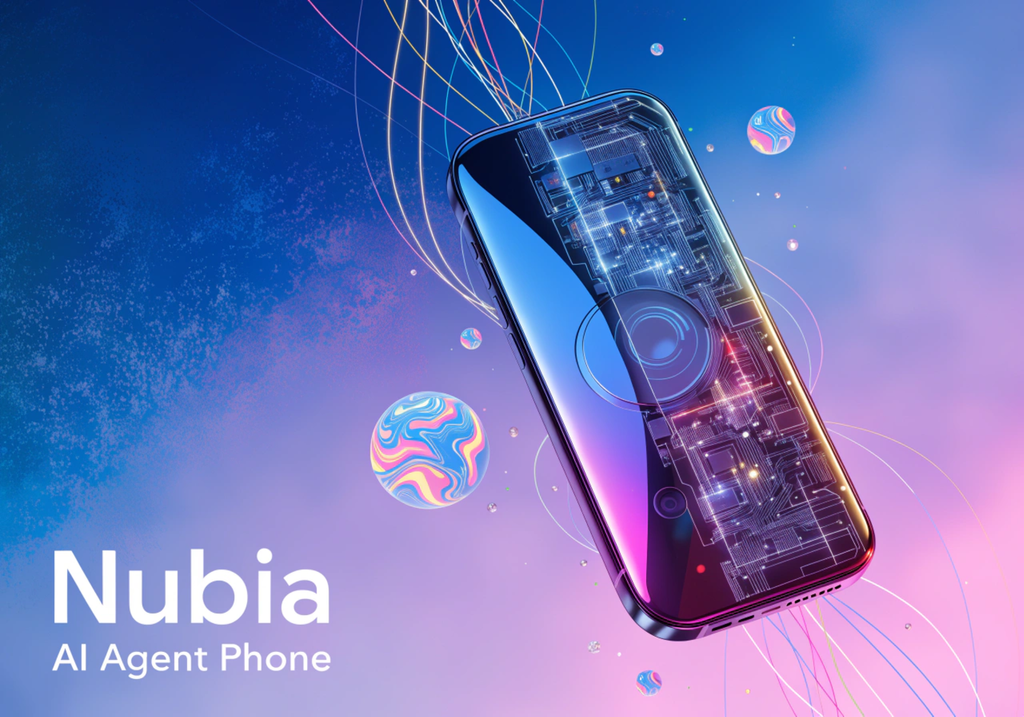
This isn’t science fiction. At WAIC 2026, Nubia launched the world’s first mass-produced AI agent smartphone, powered by ByteDance’s Doubao AI. It can book flights, compare prices, and order food—all from a single voice command.
Let’s break down everything you need to know about what is AI agent phone, how it works, and why it matters in 2026.
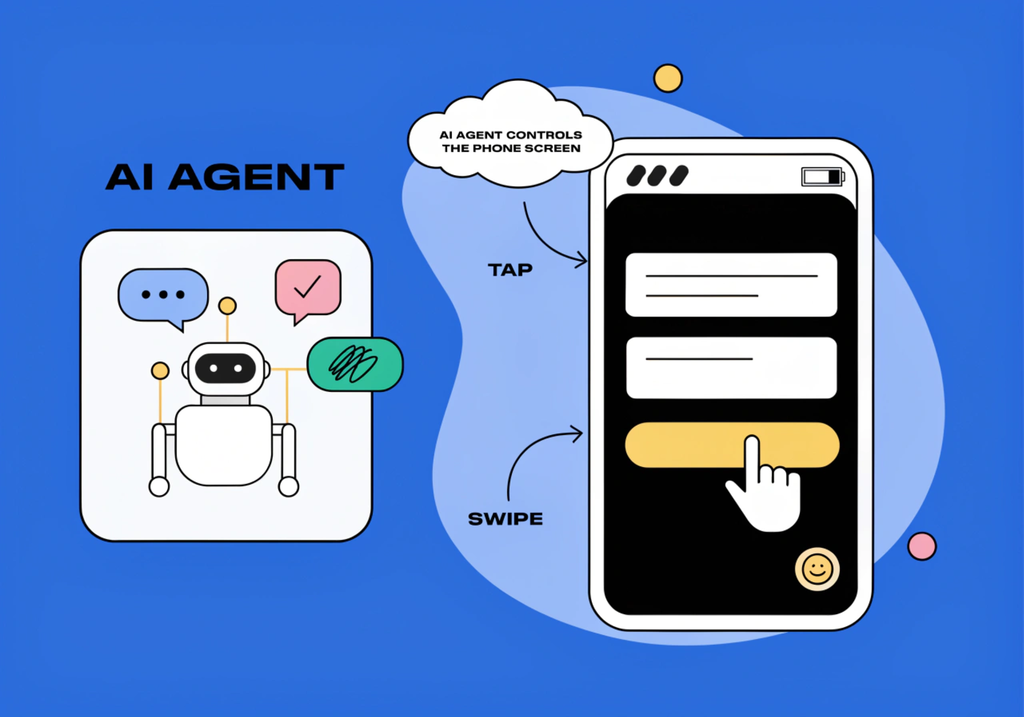
Understanding how works requires looking at three core components:
1. Screen Perception (Computer Vision)
The AI agent can see what’s on your screen in real-time. It recognizes UI elements like buttons, text fields, menus, and images—just like you do. This is powered by on-device computer vision models that process screen content without sending data to the cloud.
2. Natural Language Understanding (LLM)
It understands context, remembers preferences, and plans a sequence of actions.
3. Action Execution (Autonomous Control)
Here’s where it gets powerful. The AI agent doesn’t just suggest actions—it executes them. It can:
- Open apps (Instagram, banking, food delivery)
- Tap buttons and scroll
- Fill in forms (passenger info, payment details)
- Compare prices across apps
- Complete transactions (with your approval)
This is the key difference between a regular assistant and a true
The real power of an lies in its ability to perform autonomous tasks. These are multi-step actions that would normally require you to open multiple apps, tap, scroll, and type. Here’s what autonomous tasks look like in practice:
Travel & Booking
- “Book the cheapest flight to Beijing next week” → Opens travel apps, compares prices, fills passenger info, completes booking
- “Find a hotel near Times Square under $150/night” → Searches multiple booking platforms, filters by price and location, shows top 3 options
Shopping & E-commerce
- “Compare prices for iPhone 18 across all shopping apps and order the cheapest one” → Opens Amazon, Flipkart, eBay, compares, places order
- “Add milk, eggs, and bread to my cart and checkout” → Opens grocery app, adds items, applies coupons, completes payment
Productivity & Communication
- “Schedule a meeting with John next Tuesday at 3 PM and send him the calendar invite” → Opens calendar, checks availability, creates event, sends email
- “Reply to all unread emails from my boss with ‘I’ll get back to you by EOD'” → Opens email, filters, drafts replies, sends
Personal Assistance
- “Order my usual coffee from Starbucks for pickup at 8 AM” → Opens app, selects order, schedules pickup
- “Pay my electricity bill and set up auto-pay” → Opens banking app, navigates to bill payment, completes transaction
Can Control ? Yes—Here’s How
This is the big question: can control apps the way a human does? The answer is yes, and it’s already happening.
Direct App Interaction
- The AI agent sees the screen like you do
- It taps, swipes, scrolls, and types just like your fingers would
- It works with any app—no API integration needed
Context Awareness
- It can access your calendar, messages, and photos (with permission) to provide context
- It chains multiple actions together without losing track
Safety & Control
- Human-in-the-loop: For sensitive actions (payments, bookings), the AI asks for final approval
- Permissions: You control which apps and data the agent can access
- Transparency: The agent shows you what it’s doing at each step
Normal Smartphone: Key Differences
| Feature | Normal Smartphone | AI Agent Phone |
|---|---|---|
| Interaction | You tap, swipe, type manually | AI agent acts on your behalf |
| Task Execution | Single-app, manual steps | Multi-app, autonomous workflows |
| Understanding | Keyword-based commands | Intent-based, contextual understanding |
| Memory | No cross-app memory | Remembers preferences and history |
| Proactivity | Waits for your input | Suggests actions based on context |
| App Dependency | Requires app-specific skills | Works with any app automatically |
| Learning | Static features | Learns from your behavior over time |
The Paradigm Shift
A normal smartphone is a tool—you tell it what to do, step by step. An is a partner—you tell it your goal, and it figures out the steps.
- Normal phone: “Open Expedia, search flights to Beijing, filter by price, select cheapest, fill passenger info, pay”
- “Book the cheapest flight to Beijing next week” → Done
This is why normal smartphone isn’t just a feature upgrade—it’s a fundamental redesign of how we interact with technology.
Examples: Real Devices in 2026
1. Nubia NaviX Ultra (WAIC 2026)
- AI Engine: ByteDance Doubao
- Capabilities: Books flights, compares prices, orders food, composes messages
- Key Feature: System-level AI agent that operates across apps autonomously
- Status: First mass-produced AI agent
2. Google Pixel 11 Series (Gemini Intelligence)
- AI Engine: Gemini Nano (on-device LLM)
- Capabilities: Rambler (voice-to-text), AI overviews in Messages, Call Screen, Live Translate
- Status: Available now, agentic features rolling out
3. OpenAI’s AI Agent Phone (Announced April 2026)
- AI Engine: OpenAI’s proprietary agentic model
- Capabilities: Autonomous task execution, multi-app workflows
- Status: Announced, hardware in development
4. Samsung Galaxy S26 Series (Siri AI Integration)
- AI Engine: Apple Siri AI (cross-platform partnership rumored)
- Capabilities: Agentic automation for daily tasks
- Key Feature: On-device AI with cloud fallback for complex tasks
- Status: Expected late 2026
These AI agent phone examples show that the technology is no longer theoretical—it’s here, and it’s evolving fast.
AI Agent Phone Features 2026: What to Expect
Core Features
- System-Level AI Agent
- Not just an app—integrated into the OS
- Can control any app without API dependencies
- On-Device LLM (Large Language Model)
- Processes tasks locally for privacy and speed
- No need for constant cloud connectivity
- Multi-App Task Chaining
- Completes workflows across 3-5+ apps in one command
- Remembers context throughout the task
- Screen Perception & UI Understanding
- Recognizes buttons, forms, menus, and content
- Navigates apps like a human would
- Voice-First Interface
- Natural language commands (no rigid syntax)
- Conversational, context-aware responses
Advanced Features
- Human-in-the-Loop Safety
- Asks for approval on payments, bookings, and sensitive actions
- Transparent about what it’s doing at each step
- Cross-Platform Integration
- Works with Android, iOS, and web apps
- Syncs with your calendar, email, and cloud services
- Privacy-First Design
- On-device processing for sensitive data
- Granular permissions for app and data access
- Continuous Learning
- Improves over time based on your feedback
- Adapts to new apps and workflows automatically
These AI agent phone features 2026 are becoming standard on flagship devices, with mid-range phones expected to adopt them by 2027-2028.
The Future: From Apps to Intent
The biggest shift with AI agent phone technology is the move from app-based to intent-based interaction.
- You see a grid of app icons
- You choose which app to open
- You manually navigate menus and forms
- Each app is isolated (no cross-app memory)
- You express your goal in natural language
- The AI agent breaks it into sub-tasks
- It opens apps, fills forms, and completes actions
- It remembers your preferences across all apps
This is why companies like Google, Nubia, and OpenAI are calling it a paradigm shift. The phone is no longer a tool—it’s an autonomous actor that works on your behalf.
- You want cutting-edge technology and don’t mind being an early adopter
- You frequently book travel, shop online, or manage complex tasks
- You value time-saving automation over manual control
- You’re comfortable with AI having access to your apps and data
- You prefer full manual control over every action
- You’re concerned about AI autonomy and data privacy
- You’re on a tight budget (AI agent phones are premium-priced in 2026)
- You want mature, bug-free software (first-gen devices may have quirks)
- Nubia NaviX Ultra: First true AI agent phone, best for autonomous tasks
- Google Pixel 11: Best for Gemini integration and on-device AI
- Samsung Galaxy S26: Best for cross-platform AI features (expected late 2026)
To answer the original question—what is AI agent phone?—it’s a smartphone that acts as your autonomous digital assistant. It doesn’t just answer questions; it takes action. It doesn’t just suggest apps; it uses them for you.
From booking flights to ordering food, from managing emails to comparing prices, an AI agent phone can handle autonomous tasks that would normally take you 10-15 minutes—in seconds, with a single voice command.
Rating: ⭐⭐⭐⭐☆ (4/5 for early adopters)
Future Potential: ⭐⭐⭐⭐⭐ (5/5)
| Image # | Alt Text | Title | Caption | Description |
|---|
| Image # | Alt Text | Title | Caption | Description |
|---|---|---|---|---|
| 1 (Hero) | What is AI agent phone 2026 Nubia Doubao AI smartphone | World’s First AI Agent Phone at WAIC 2026 | Nubia’s AI agent phone can autonomously book flights, order food, and complete multi-app tasks | Official image of Nubia AI agent smartphone demonstrating system-level AI agent capabilities |
| 2 (Workflow) | How AI agent phone works perceive reason act workflow diagram | AI Agent Phone Working Process 2026 | AI agent perceives screen, reasons with LLM, and executes actions autonomously | Flowchart showing the three-step process of how AI agent phone works from perception to action |
| 3 (Task Example) | AI agent phone autonomous tasks booking flight example | AI Agent Phone Completing Multi-Step Task | AI agent autonomously books flight by opening apps, comparing prices, and filling forms | Visual example showing AI agent phone autonomous tasks workflow for travel booking |
| 4 (Screen Control) | Can AI agent control phone screen taps swipes demonstration | AI Agent Phone Screen Control Capability | AI agent autonomously taps, swipes, and types across apps like a human user | Demonstration of how AI agent can control phone apps through screen perception and action execution |
| 5 (Comparison) | AI agent phone vs normal smartphone comparison chart features | AI Agent Phone vs Normal Smartphone Key Differences | Side-by-side comparison showing interaction, task execution, and intelligence differences | Infographic highlighting the paradigm shift from manual smartphone use to autonomous AI agent control |
| 6 (Examples) | AI agent phone examples Nubia Pixel OpenAI Samsung 2026 | Real AI Agent Phone Devices Available in 2026 | Nubia NaviX Ultra, Google Pixel 11, OpenAI agent phone, and Samsung Galaxy S26 | Visual showcase of leading AI agent phone examples from major manufacturers |
| 7 (Features) | AI agent phone features 2026 checklist system-level AI multi-app | Essential AI Agent Phone Features in 2026 | System-level AI, on-device LLM, multi-app chaining, and voice-first interface | Visual checklist of top AI agent phone features 2026 buyers should look for |
| 8 (Future) | From apps to intent AI agent phone future interface comparison | The Future of Smartphones: Apps to Intent | Traditional app grid vs AI agent intent-based interface | Conceptual visualization showing the paradigm shift from manual app navigation to AI-driven intent execution |